Main Research
Published:
My research focuses on developing AI-driven multimodal medical imaging methods to investigate disease mechanisms and support precision diagnosis, with a particular emphasis on nuclear medicine, total-body PET/CT, and neurodegenerative diseases.
Highlighted Research
Top Rated Oral Presentation at EANM 2025
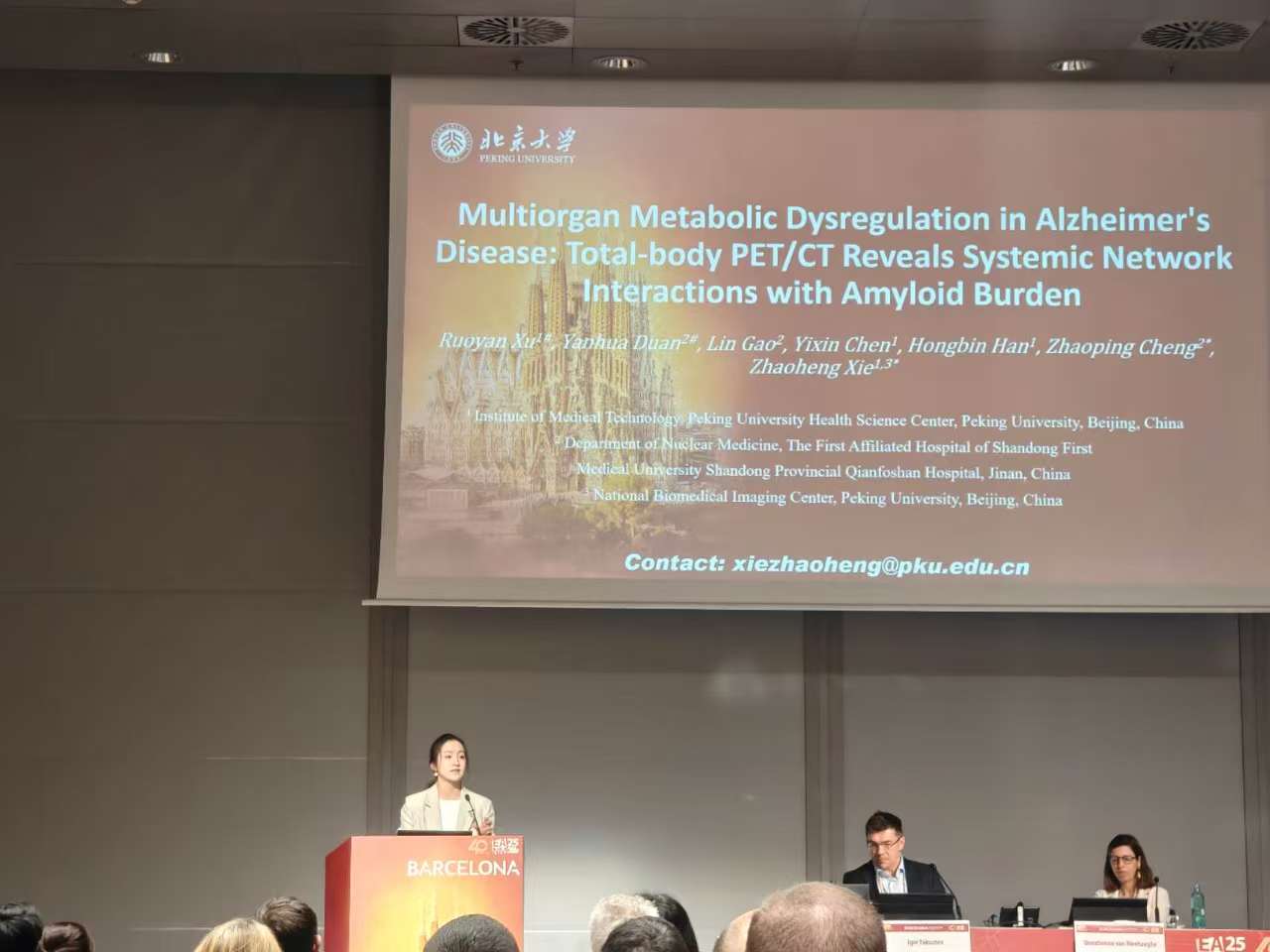
Multiorgan Metabolic Dysregulation in Alzheimer’s Disease:
Total-body PET/CT Reveals Systemic Network Interactions with Amyloid Burden
This study was accepted as a Top Rated Oral Presentation (TROP) and featured in the EANM Neuroimaging Committee: Innovations and Methodologies in Nuclear Neuroimaging session at the Annual Congress of the European Association of Nuclear Medicine (EANM 2025).
The work leverages total-body PET/CT to characterize systemic metabolic network interactions associated with amyloid burden in Alzheimer’s disease, highlighting methodological advances in whole-body neuroimaging beyond brain-centric analyses.
Multimodal Neuroimaging for Alzheimer’s Disease
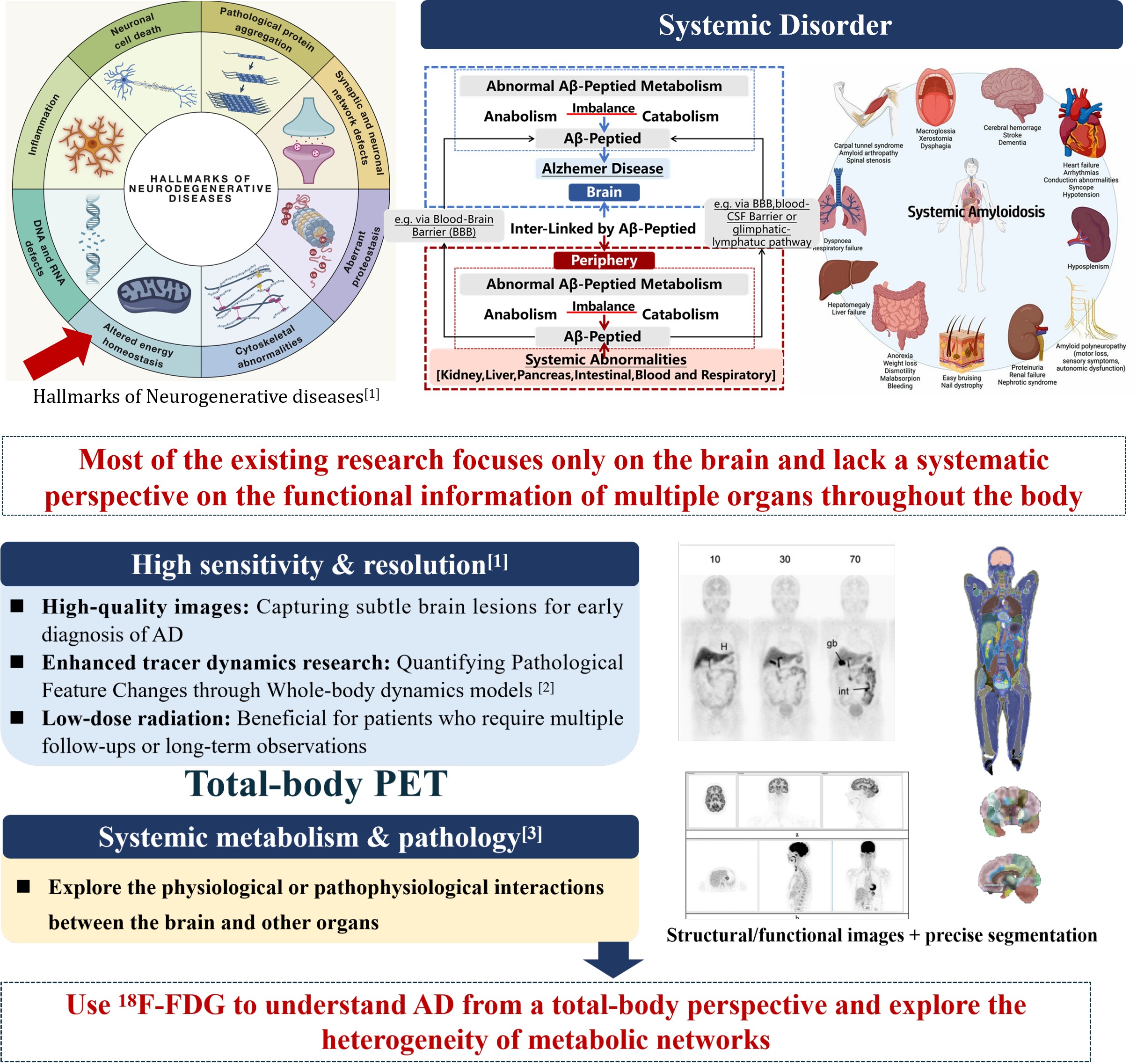
I study systemic and brain-specific metabolic alterations in Alzheimer’s disease using total-body PET/CT, integrating whole-body FDG and amyloid PET imaging with network-based and machine learning approaches. This research aims to move beyond brain-only analyses by characterizing multi-organ metabolic network interactions and their associations with amyloid burden and cognitive decline.
Current topics include:
- Construction of whole-body and brain metabolic networks from total-body PET/CT
- Integration of FDG and amyloid PET for multilayer network analysis
- AI-based modeling of disease-related network disruption and progression
AI-driven Multimodal Imaging for Graves’ Ophthalmopathy
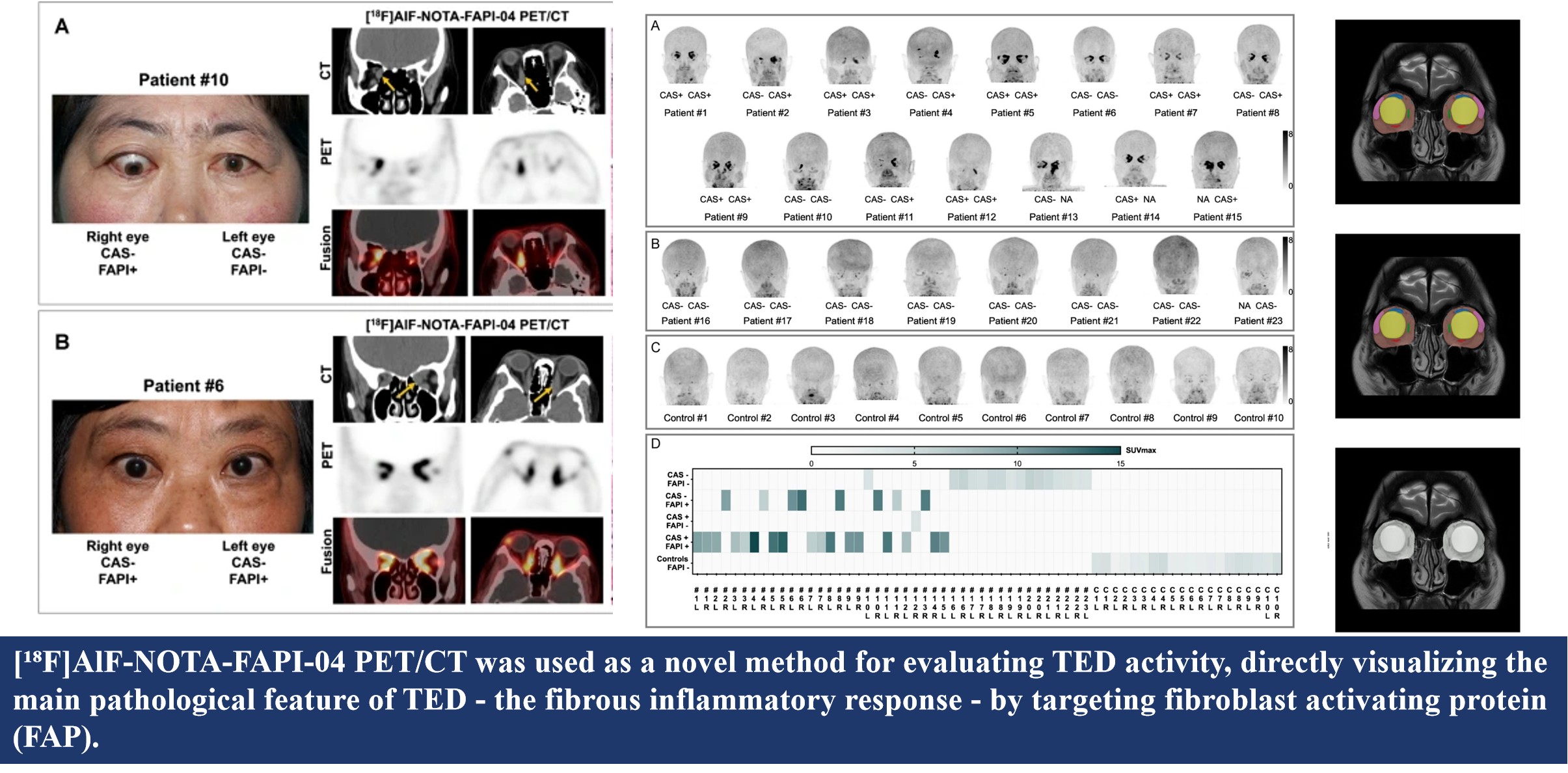
I am also involved in developing a precision assessment and staging framework for Graves’ ophthalmopathy based on [¹⁸F]AlF-NOTA-FAPI-04 PET/CT and deep learning–based multimodal image fusion. By combining functional PET information with anatomical imaging and data-driven models, this work aims to improve quantitative evaluation, disease stratification, and clinical decision-making in orbital disease.
Current topics include:
- Quantitative analysis of FAPI uptake in orbital tissues
- Deep learning–based multimodal fusion of PET and CT/MR imaging
- Automated disease staging and phenotype classification
Methodological Interests
Across these applications, I am broadly interested in methodological advances in medical image analysis and artificial intelligence, including:
- Multimodal image registration and fusion
- Graph-based modeling of metabolic and functional networks
- Interpretable machine learning for clinical imaging applications